The Road is about a father and his boy on there journey through the scorched lands to the coast, in belief that there is hope there. The land is completely dead, trees entirely stripped and slowly dying. The snow is sometimes made of ash, the rain is thick and suffocating. The journey is both a physical one and a mental one. The physical journey, surviving the harsh and winter scorched wastelands, as well as finding whatever food and materials possible. While also hiding from those that hunt their own kind for food. The mental journey is mainly just in the father. He's believes that he has to keep the boy alive no matter what, so he is very insecure with everything around him. He's deep with mistrust for the world, believing everything is a danger. Not only mistrust, but he fights against his own rotting mind, believing that if he gives in to exhaustion and comfort will lead to his death.
If I were to meet Cormac McCarthy it would probably only be in some coffee shop or restaurant. But if I were to pick where I met him, it would probably have to be in a world much like the book itself. I would only have one question for him, "Is this what you believe the earth will be like in the future?". Honestly, I think the book is great. It has no reason to why this event has happened, it simply has and you have to except it. The setting is always dark mooded and barren, almost a solitude to it. The world itself appears dead. The way he writes the book is very different from most others I've read. He has very many long running sentences, as if he replaced a bunch of the periods with ands instead. And there is no actual dialogue, no sentences with parenthesis. There aren't any names at all for any characters. There isn't even any hint or description as to where they are in the world.
Monday, October 4, 2010

Sunday, October 3, 2010
Meeting Kate Brian

I was at boarders checking out some new books to add to my ever-growing collection when I noticed there was an autograph session going on near the back of the store. Curious as to whom this mysterious author was I made my way to the line. Much to my surprise it was none other than Kate Brian, the author of the book I had just finished Lucky T. The book had left me with such a strong urge to go to a country like India and volunteer with the unfortunate children there. The details she put in the book made it really feel like you were in India, almost like she was writing from first hand experience. That, was one thing I always wanted to know after reading the book, if she had ever participated in an outreach program or was a part of the peace core.
I had only been standing in line for only a few minutes since the line was sort of small, suddenly I was at the beginning of the line. “I just have to know, what inspired you to write a book that exposed not only the beauty of another culture, but the ugly truth behind it?” I asked her.
“Well, I find great joy in volunteering, giving back to the less fortunate in our communities, and I wanted to spark that enthusiasm in my readers.” She said thoughtfully. “At the same time I wanted to educate them on the fact that it’s not just our communities that need help, that we all need to put aside our selfish ways and help each other all around the world. If we allow ourselves to do that there is no telling how many wonderful people we will meet, and how many more opportunities open up.”
“Have you ever been to India, because the imagery in the book is so detailed, and the knowledge of the culture is very in depth?” I asked while she was signing my copy of the book.
“Actually, that was the hardest part of writing this book for me. It took a lot of research, and luckily I have a friend who used to live in India for a long time. She set me up with a series of pen pals in order to come up with ideas for characters within my book. That is actually how I got most of the names for the book.” She said. She then gave me my book and turned her attention to the next person in line.
I had only been standing in line for only a few minutes since the line was sort of small, suddenly I was at the beginning of the line. “I just have to know, what inspired you to write a book that exposed not only the beauty of another culture, but the ugly truth behind it?” I asked her.
“Well, I find great joy in volunteering, giving back to the less fortunate in our communities, and I wanted to spark that enthusiasm in my readers.” She said thoughtfully. “At the same time I wanted to educate them on the fact that it’s not just our communities that need help, that we all need to put aside our selfish ways and help each other all around the world. If we allow ourselves to do that there is no telling how many wonderful people we will meet, and how many more opportunities open up.”
“Have you ever been to India, because the imagery in the book is so detailed, and the knowledge of the culture is very in depth?” I asked while she was signing my copy of the book.
“Actually, that was the hardest part of writing this book for me. It took a lot of research, and luckily I have a friend who used to live in India for a long time. She set me up with a series of pen pals in order to come up with ideas for characters within my book. That is actually how I got most of the names for the book.” She said. She then gave me my book and turned her attention to the next person in line.
Going Bovine Review
I can honesly say I hate the ending of the book. It was all so confusing! I couldn't tell if Cameron died or went to Heaven or what really happened to him. Or if he was even cured! Throughout the book, Cameron kept having flashbacks to while he was in the hospital, but the way they were described was like it was all happening right then, and the journey was a dream. Or the hospital was a dream. I didn't understand it.
If I could meet Libba Bray, it would probably be in a parallel universe where there is a huge field of tall grass and giant wishing tree nearby like in one of the scenes from Going Bovine. Before I asked anything, I'd make a wish that she'd answer all of my questions honestly.
This is a short list of questions I would ask.
1. Why did the book end the way it did? What was the meaning behind it?
2. What were the flash-backs? Were they even flash-backs?
3. What happened to Cameron?
4. Did he live with Dulcie (the angel) forever after that?
5. What about Gonzo? Where did he end up?
I'd hope that she'd answer in a way that would make me happy. Like, "Of course no one died, silly!" And "The whole journey was a dream. Even Dulcie and Balder, sadly. But in the end, everyone lived happily ever after!"
But I know that most novels don't end that way. Including this one. Even though I'm not exactly sure how it did end...
As for a reccomendation, I would reccomend this to anyone. Or mostly anyone. The would be rated "R" for strong language, but other than that, scenarios were appropriate. Except for the occasional drug and alcohol references. So, any high school student would be able to read this. It was funny and witty, but also sent a powerful message.
Into the Wild
In the book Into the Wild Chris McCandless decides that he is sick of his normal everyday conformist life and wants a change. He decides to have an adventure crossing the western coast of the United States in search of finding self enlightenment. Since this was a true story and was only dictated by Jon Krakauer I would hve any plot question for him. If I did meet Krakauer I would hae a couple of choose questions of how he set up the events.
If I were to meet Krakauer in a coffee shop I would like to ask him a few questions. I would like to know if he believed that McCandless was mentally ill or if he believed he was wiser than us all. I would like to know if Krakauer believed that it was justifiable that he leaved his family without a word of notice. One of my biggest question would have been that, why did he believe that McCandless always tried to push himself to the edge to his utter demise?
Krakauer would have insight on the inner psychi of McCandless and would be able to answer the questions I would inquire. From inteviews I have read I realized how intelligent Krakauer is and how he has the ability to give his opinions about his book Into the Wild.
If I were to meet Krakauer in a coffee shop I would like to ask him a few questions. I would like to know if he believed that McCandless was mentally ill or if he believed he was wiser than us all. I would like to know if Krakauer believed that it was justifiable that he leaved his family without a word of notice. One of my biggest question would have been that, why did he believe that McCandless always tried to push himself to the edge to his utter demise?
Krakauer would have insight on the inner psychi of McCandless and would be able to answer the questions I would inquire. From inteviews I have read I realized how intelligent Krakauer is and how he has the ability to give his opinions about his book Into the Wild.
Tuesday, September 28, 2010
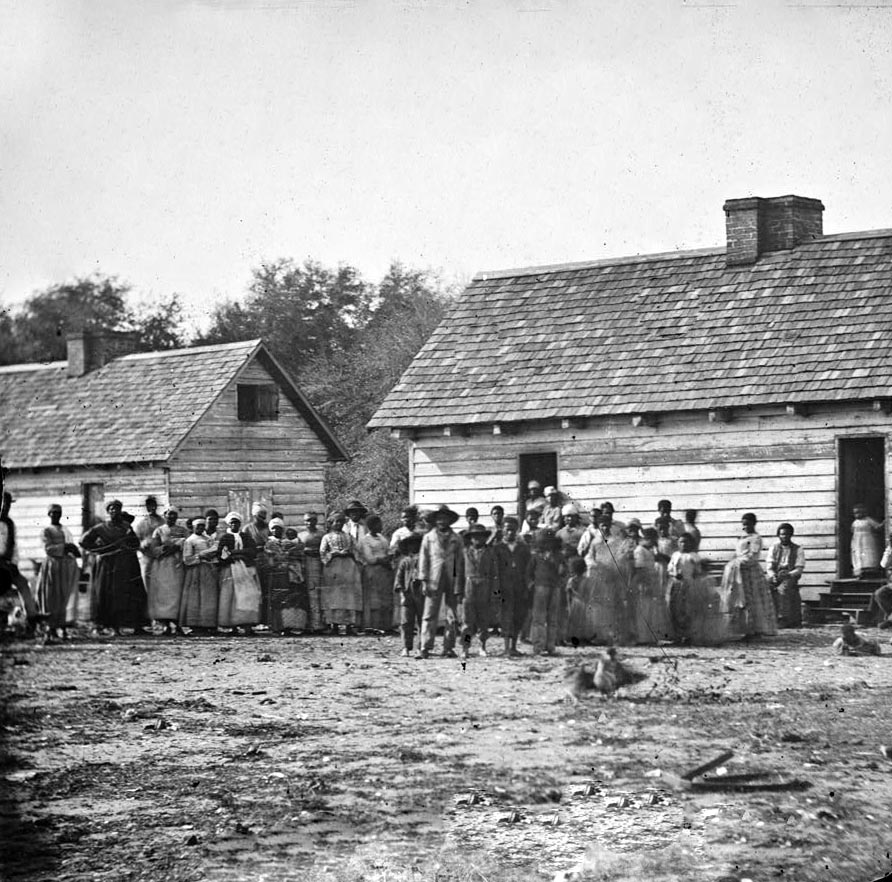 The book Dark Trail, By Hiram King, is about the journey of a freed slave who is trying to find his family. Bodie Johnson (the main character of the book) has little to his name. The only thing that he has in life is his family. However, they were packed onto a slave train when the Confederates started losing the war and shipped farther inland. Bodie is determined to find his family and will stop at nothing until his quest is finished. If he can't find them, he'll die trying. Bodie's mind and body are tested throughout the book as he travels West on his trusty steed to seek out the ones he loves. During his lonesome travels, Bodie thinks about the possibility that he may arrive too late, after all, the train has a three or four month head start on him. He meets many strange and new people along his path, some nice, others not so much. He gets jumped and shot at multiple times and always seems to be attracted to trouble. Another battle that Bodie faces is one of his own mind and heart. Bodie meets a girl named Deedee in the midst of his travels and falls in love but is forced to leave her in search of his family. Throughout the book, Bodie faces an unthinkable amount of hardships, but doesn't stop for even one minute or think about giving up.
Now that you're finished with your book

When you finish a book, you should have a reaction to being done. (Besides relief). Sometimes, that reaction is a wish that the book hadn't ended. Once in a while you might want to hurl it across the room because you're so upset at the way it ended! You might also feel as if there were some questions left unanswered.
In this reading log, I'd like you to pretend you have just run into the author of your book somewhere in his or her world or yours. Set the scene, (coffee shop, racetrack, orbiting in space....) and then have a dialogue with the author in which you pose a question or let him/her know what you think about it.
The point of this post is to answer this question in a creative way: If you could meet the author of your book now that you are finished, what would you say to him or her?
Have some fun with it!
Monday, September 27, 2010
The Road
The Road is definitely a physical journey. The protagonists are a father and his son. They are traveling through the charred and barren lands of America, trying to make it to the coast. The father claims that they will be safer once they have reached the coast. The last half of the quote, "The dream can also be one that involves hardship, slogging through a forest, paddling down a river, confronting suspicious people, living in a hostile place, testing your adaptability, hoping for some sort of revelation", fits this book exactly. The father and son must scavenge and salvage anything and everything possible that they come upon. The father trusts no one and believes that no where is safe. While struggling against the winters of the apocalypse, the father must also struggle against his mistrust and rotting mind.
Subscribe to:
Posts (Atom)